Pactle
Made in India, for the World: Pritesh Shah's Journey of Innovation, Resilience, and Purpose
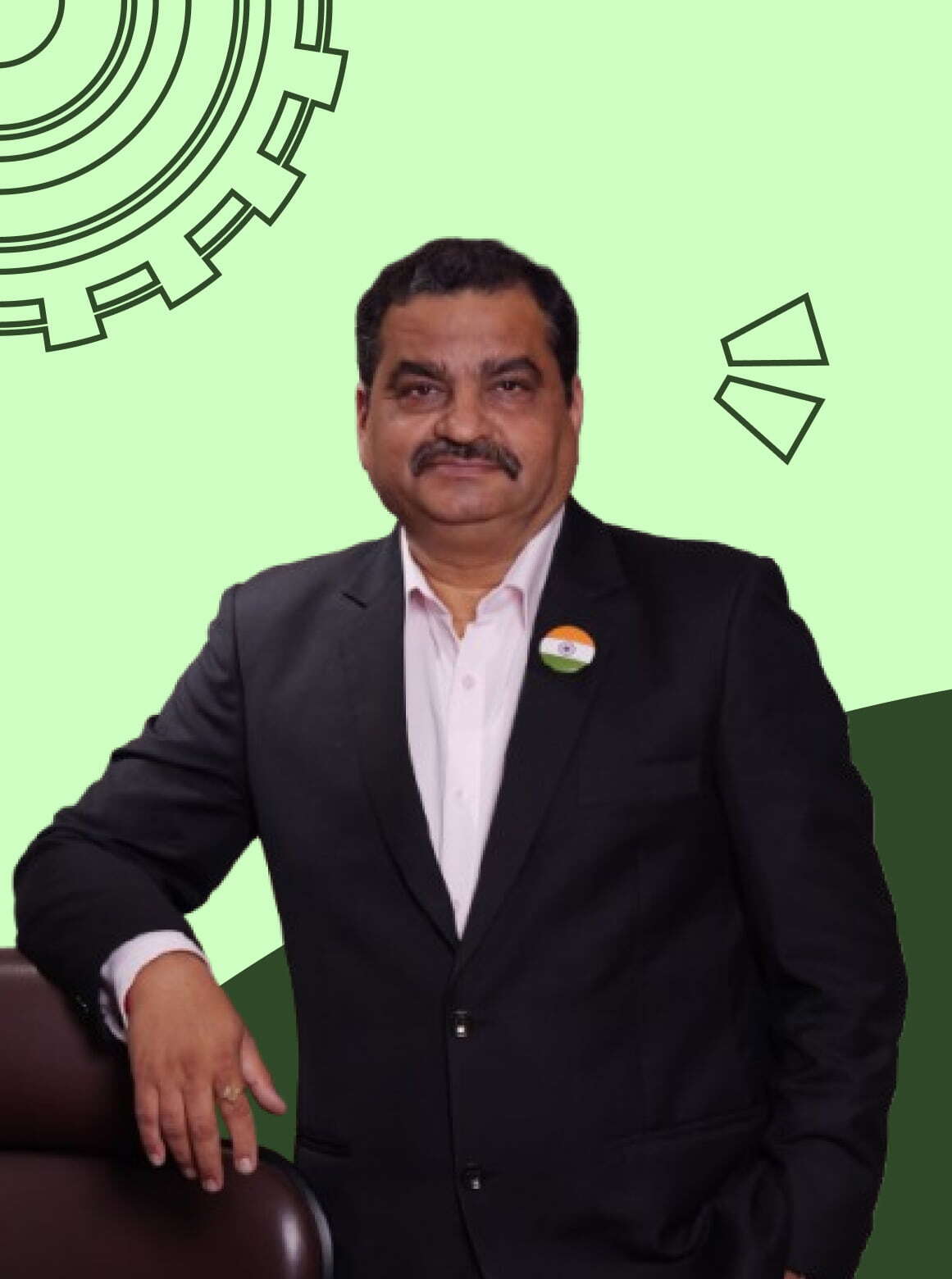
Prima Equipment's chairman proves how Indian engineering can meet—and exceed—global standards.

Made in India, for the World
In a time when India’s manufacturing landscape was still evolving, Pritesh Shah envisioned building world-class technology rooted in Indian capability. Not from corporate privilege, but from resilience, hardship, and the belief that Indian engineering could meet — and exceed — global standards.
Today, as Chairman of Prima Equipment, he leads a company recognized for its pioneering work in environmental monitoring systems and industrial safety solutions. But his story, which began with just ₹140 in his pocket, is far more than a business narrative — it is a testament to grit, innovation, and unwavering values.
Early Life and the Seeds of Enterprise
Born in Jamnagar and later settled in Vadodara, Pritesh grew up in a family with a seven-generation legacy in trade and business. His father, an electronics engineer, introduced him to the world of instrumentation — something that deeply shaped his interests. In 1986–87, while still in the 12th standard, Pritesh founded Prima Equipment, sketching the company’s first letterhead by hand and printing it on a dot-matrix printer — a reflection of his early entrepreneurial spark.
But life took a difficult turn. A tragic car accident left his father handicapped and the family business collapsed. Soon after, his mother was diagnosed with cancer. In 1992, Pritesh moved from Mumbai to Vadodara with only ₹140, determined to rebuild from scratch.
Building from the Ground Up
Starting small, Pritesh took up representation for industrial testing equipment — a space that was niche and often misunderstood in the early 1990s. Environmental and safety systems were not priorities for most industries, and convincing customers required patience, education, and persistence. By 1995–96, Prima began developing and manufacturing its own devices, marking the company’s transition from trading to technology creation.
A defining moment arrived in 1999, when Prima received a challenging requirement from a power plant for a flue gas measurement system. Despite limited resources and long credit terms, Pritesh and his small team took the risk and built an indigenous system that ultimately achieved MCERTS certification (UK) — a global benchmark few Indian companies had reached at the time.
It was a turning point. Prima became the first Indian company to cross that milestone, demonstrating that Indian engineering could hold its own against international technology. Their product continued to evolve over the years and now integrates advanced features including AI and IoT — capabilities the company began experimenting with long before they became industry buzzwords.
Innovation for a Greener Tomorrow
At the core of Pritesh’s philosophy is the belief that environmental technology must go beyond compliance. He often highlights the challenge India faces — balancing industrial growth with environmental responsibility — and sees his company’s mission as contributing to a “green nation” and a “green earth.”
Prima’s environmental monitoring systems are designed as complete solutions, ensuring accuracy, reliability, and long-term usability. But more importantly, these systems help industries derive insights that improve efficiency, reduce wastage, and optimize processes — proving that sustainability and profitability can coexist.
Facing Challenges with Purpose
Despite the progress India has made, Pritesh remains vocal about the structural and policy challenges that Indian manufacturers still face.
He highlights the shortage of skilled manpower, especially in roles that require both field expertise and technical understanding. Digital transformation has reduced some manual work, but he firmly believes that hands-on problem-solving and field presence remain irreplaceable for industries like theirs.
Another major challenge is the heavy dependence on foreign certifications. India lacks fully accredited facilities for testing and certifying advanced environmental monitoring equipment. As a result, companies must send instruments abroad to comply with international standards — a time-consuming and expensive process.
Pritesh stresses that although India has invested heavily in environmental infrastructure in recent years, domestic manufacturers receive only a fraction of the industry’s spending due to these systemic barriers.
Technology, AI, and the Human Factor
While Pritesh embraces new technologies, including AI-driven tools, he warns against over-reliance on automation. For him, technology is a means to enhance human intelligence, not replace it. Productivity tools and digital systems must support decision-making, but human judgment, ethics, and accountability, he believes, remain at the heart of meaningful progress.
Leadership Lessons and Advice for Entrepreneurs
Pritesh’s journey — marked by hardship, rebuilding, and innovation — has shaped a set of deeply value-driven principles:
- Keep learning. Knowledge compounds and sustains success.
- Earn profit with value. Money gained through principles lasts longer.
- Contribute to the nation. Build industries that strengthen India.
- Operate with integrity. He often references Sardar Patel’s ideals of honesty in public and private life.
- Invest in innovation and ethics. These are the true foundations of long-term impact.
Why His Story Matters
In a landscape often dominated by global brands, Pritesh Shah’s story stands out as proof that Indian companies can innovate at world-class levels. From a teenager drawing his own letterhead to leading a company that builds advanced environmental technologies, his journey reflects the evolution of India’s industrial spirit.
It is a story of resilience, belief, and nation-first thinking — a story that demonstrates how technology, when paired with ethics and purpose, can create not just products but progress.
Closing Thought
From rebuilding his life with ₹140 to developing internationally recognized environmental systems, Pritesh Shah embodies what India’s manufacturing future can look like — innovative, principled, and globally competitive.
His journey reminds us that true success is not merely about scaling a business, but about uplifting industries, contributing to sustainability, and staying rooted in values. As India moves towards a greener and more technologically advanced future, leaders like him demonstrate that progress is ultimately driven by people — people with conviction, courage, and a commitment to building a better nation.
Recent Stories

At the Intersection of Engineering, Manufacturing, and India's growing HVAC/Built Environment sector: Nisha Anil Nair
Breaking Barriers — Arundhati Shinde’s 35-Year Journey in Manufacturing Leadership